Roofing Punta Gorda — the city that rebuilt after Charley, and rebuilt again after Ian
Twenty thousand people on Charlotte Harbor, in the canal homes of Punta Gorda Isles and Burnt Store Isles and the Victorian streets of the historic district. Thirty minutes up Burnt Store Road.
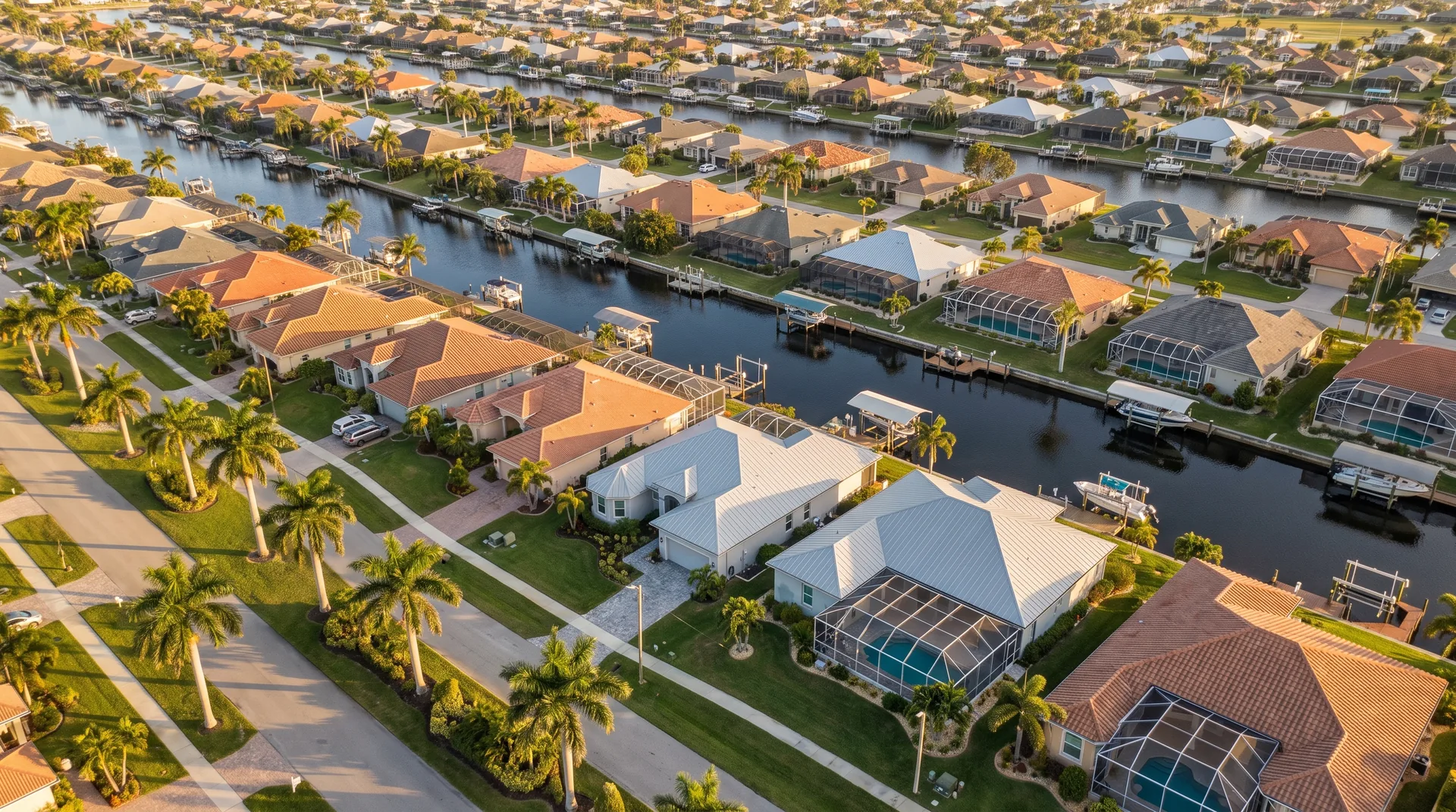
Punta Gorda is the Charlotte County seat, a city of about 20,000 at the mouth of the Peace River that took a direct hit from Hurricane Charley in 2004 and rebuilt to the modern code — and then stood in Ian's eyewall in 2022 and mostly held. Its roofing is three neighborhoods: Punta Gorda Isles and Burnt Store Isles, the big canal communities where nearly every home wears concrete tile or metal and every roof faces the harbor; the historic district downtown, with its Victorian and craftsman houses and their steep shingle and standing-seam roofs; and the 1970s–90s subdivisions and condos along US-41 and Taylor Road. The City of Punta Gorda permits and inspects every re-roof, and the historic district reviews visible changes.
Punta Gorda is the north end of our route — about 30 minutes up Burnt Store Road from Cape Coral — and we cover it with the crews that work the Northwest Cape. Tile re-underlayment and replacement in PGI and Burnt Store Isles, aluminum standing seam for the harbor-front homes, repairs and storm claims, historic-district roofs done to the district's expectations, and wind-mitigation inspections. We pull the city permit under the license; the PGI and Burnt Store Isles associations get their submittals.
What we do in Punta Gorda
Roof repair & leaks
Tile, shingle, metal and flat repairs with photos and a written price.
Hurricane & storm damage
Tarping, documentation, adjuster meetings, repair to code.
Roof replacement
Tile, metal or shingle on a sealed, code-built deck.
Inspections & wind mitigation
Free inspections; OIR-B1-1802 reports for your insurer.
Tile roofing
Repair, re-underlayment or new tile.
Metal roofing
Standing seam and 5V, aluminum near the salt.
Neighborhoods and areas we cover
- Punta Gorda Isles (PGI)
- Burnt Store Isles
- Historic district (downtown)
- Fishermen's Village area
- Marion Avenue
- Olympia Avenue
- Retta Esplanade
- US-41 corridor (Punta Gorda)
- Taylor Road
- Aqui Esta Drive
- Bal Harbor Boulevard
- Deep Creek (adjacent)
- Charlotte Harbor (north shore, adjacent)
- Burnt Store Road north
- Seminole Lakes
- Punta Gorda Airport area
Charley, Ian and the code
Most of Punta Gorda's roofs went on after Charley in 2004, which means they were built to the modern wind code and are now approaching twenty years — and Florida insurers count from the permit date. Ian tested them in 2022 and most passed. If your carrier is asking about roof age, a free inspection and a wind-mitigation report give you the answer in writing.
Questions from Punta Gorda homeowners
Is Punta Gorda really in your service area?
It's the north end of it — about 30 minutes up Burnt Store Road. Our Northwest Cape crews cover it, we group Punta Gorda jobs, and we give you a firm date and keep it.
Does the historic district review a new roof?
Visible changes — material, color, profile — go through the city's historic review. Like-for-like repairs are simpler. We flag it before you commit to a material.
My PGI tile roof is from 2005 — what should I expect?
Underlayment at the end of its life. Lifting the tile and replacing the underlayment saves most of the tile and a third or more of the cost of a new roof; we look and price both.
Do the PGI and BSI associations have to approve a roof?
Color and profile, yes, through their architectural review. We prepare the submittal with the estimate.
Who issues the permit?
The City of Punta Gorda inside the limits; Charlotte County for Deep Creek, Charlotte Harbor and the unincorporated areas around the city. We check and pull the right one.